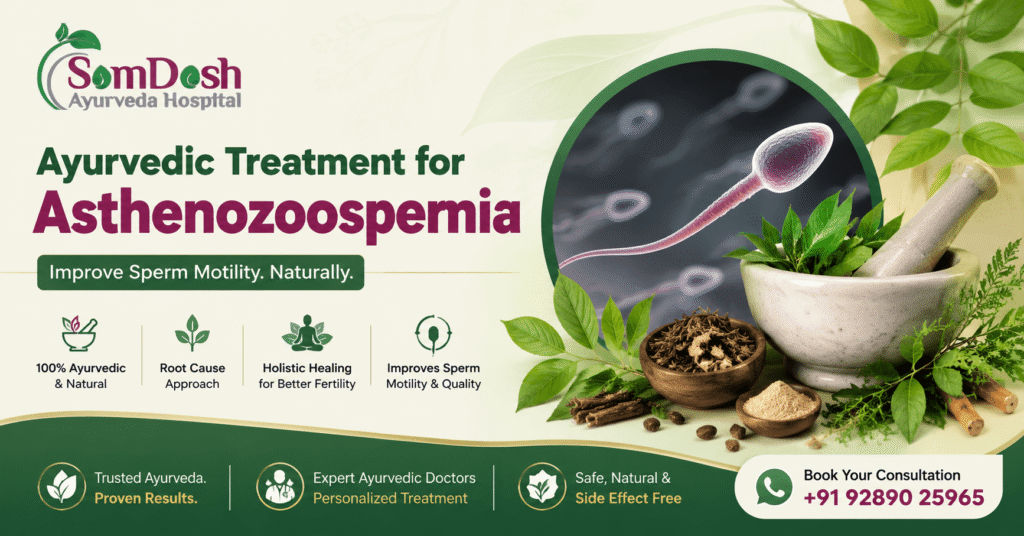
Asthenozoospermia is a male fertility condition characterized by reduced sperm motility, which means that sperm have difficulty moving efficiently towards the egg. Healthy sperm movement plays an important role in natural conception. When sperm motility is lower than normal, it may become more challenging for couples to achieve pregnancy.
Many couples exploring fertility solutions look for a combination of medical guidance, healthy lifestyle changes, and traditional wellness approaches. Ayurveda offers a holistic perspective on male reproductive health, focusing on overall physical well-being, nutrition, lifestyle balance, and reproductive vitality. Samdosh Ayurveda aims to provide Ayurvedic guidance for individuals seeking support for male reproductive health.
What Is Asthenozoospermia?
Asthenozoospermia refers to reduced sperm movement identified through a semen analysis. Sperm motility is generally assessed by examining how many sperm are moving and how effectively they swim.
There are different levels of sperm motility, and reduced movement can affect the chances of sperm reaching and fertilizing an egg. However, asthenozoospermia does not automatically mean that natural pregnancy is impossible.
A proper fertility evaluation helps identify the possible causes and appropriate treatment options.
Common Causes of Asthenozoospermia
Several factors may contribute to reduced sperm motility, including:
- Oxidative Stress: Excessive oxidative stress can damage sperm cells and affect their movement.
- Hormonal Imbalance: Changes in reproductive hormones may influence sperm production and quality.
- Varicocele: Enlarged veins around the testicles can affect testicular temperature and sperm health.
- Infections and Inflammation: Certain reproductive tract infections may negatively affect sperm motility.
- Lifestyle Habits: Smoking, excessive alcohol consumption, poor sleep, and lack of physical activity may affect male fertility.
- Excessive Heat Exposure: Frequent exposure to high temperatures around the testicles may influence sperm production.
- Nutritional Deficiencies: Inadequate intake of essential nutrients may affect overall reproductive health.
Identifying the underlying cause is an important step towards choosing an appropriate treatment plan.
How Does Ayurveda Approach Asthenozoospermia?
Ayurveda emphasizes maintaining balance within the body and supporting overall reproductive wellness. Traditional Ayurvedic concepts associate male reproductive vitality with Shukra Dhatu, which is connected with reproductive health.
Ayurvedic care may involve individualized recommendations related to diet, daily routines, stress management, and selected herbal preparations.
At Samdosh Ayurveda, individuals interested in Ayurvedic approaches to male fertility can seek professional guidance to understand suitable wellness options based on their health concerns.
It is important to understand that Ayurvedic treatments have not been established as a proven cure for asthenozoospermia. Their effectiveness in improving sperm motility requires further scientific research.
Ayurvedic Herbs Traditionally Associated with Male Reproductive Wellness
Certain herbs are traditionally used in Ayurveda to support male reproductive health. These include:
1. Ashwagandha: Traditionally used to support stress management, vitality, and general wellness. Some preliminary studies have explored its potential effects on male reproductive parameters, but stronger evidence is needed.
2. Shatavari: Traditionally associated with reproductive wellness and overall body nourishment.
3. Kapikacchu: Also known as Mucuna pruriens, this herb has been studied for its possible effects on certain male reproductive parameters.
4. Gokshura: Traditionally used in Ayurvedic wellness practices to support urinary and reproductive health.
The suitability, safety, and dosage of herbal preparations should always be assessed by a qualified healthcare professional. Herbal products may interact with medications or cause side effects.
Lifestyle Changes That May Help Support Sperm Motility
Alongside professional treatment, healthy lifestyle habits can play an important role in supporting male reproductive health.
- Eat a Balanced Diet: Include fruits, vegetables, whole grains, nuts, seeds, and adequate protein.
- Exercise Regularly: Moderate physical activity can support metabolic and hormonal health.
- Maintain a Healthy Weight: Weight management may help improve overall reproductive wellness.
- Avoid Smoking: Tobacco use can negatively affect sperm quality and motility.
- Limit Alcohol: Excessive alcohol consumption may affect reproductive health.
- Manage Stress: Meditation, yoga, and relaxation techniques may support emotional well-being.
- Get Proper Sleep: Maintaining a regular sleep schedule supports general health.
- Avoid Excessive Heat: Limit frequent exposure to hot tubs and other sources of prolonged testicular heat.
Lifestyle improvements may support fertility, but they cannot replace appropriate medical evaluation.
Medical Tests for Diagnosing Asthenozoospermia
Before choosing a treatment approach, it is important to understand the condition and its possible causes. Healthcare professionals may recommend:
- Semen analysis to evaluate sperm concentration, motility, and morphology.
- Hormonal testing when an endocrine problem is suspected.
- Physical examination to check for varicocele or other reproductive concerns.
- Additional investigations if infection or another underlying condition is suspected.
A repeat semen analysis may also be recommended because sperm parameters can naturally vary between samples.
How Long Does It Take to Improve Sperm Motility?
Sperm development takes approximately 74 days, followed by additional maturation and transport time. Therefore, changes in lifestyle or treatment may take around three months or longer to become noticeable in semen analysis.
The improvement period depends on the underlying cause, individual health, and treatment approach. Not everyone experiences the same results.
Regular follow-ups and repeat testing can help assess progress.
Why Seek Professional Guidance from Samdosh Ayurveda?
Choosing an appropriate approach to male reproductive wellness requires understanding individual health conditions and fertility concerns.
Samdosh Ayurveda focuses on traditional Ayurvedic wellness principles and individualized guidance. Individuals exploring Ayurvedic care for asthenozoospermia can seek professional advice about suitable dietary practices, lifestyle recommendations, and herbal preparations.
Any Ayurvedic approach should complement, rather than delay or replace, evidence-based fertility assessment and treatment. Couples experiencing difficulty conceiving should consider consulting a qualified fertility specialist or urologist.
Conclusion
Asthenozoospermia can be a challenging fertility concern, but reduced sperm motility does not mean that parenthood is impossible. Understanding the underlying cause, following a balanced lifestyle, receiving appropriate medical care, and exploring safe complementary wellness approaches can help individuals make informed decisions about their reproductive health.
For more details visit at https://samdoshayurveda.com/ayurvedic-treatments/asthenozoospermia/
How useful was this post?
Click on a star to rate it!